Kent’s listed stock spent the last century being heated and modernised. That is when asbestos went in: basement lagging, AIB behind panelling, coatings over original lath and plaster.

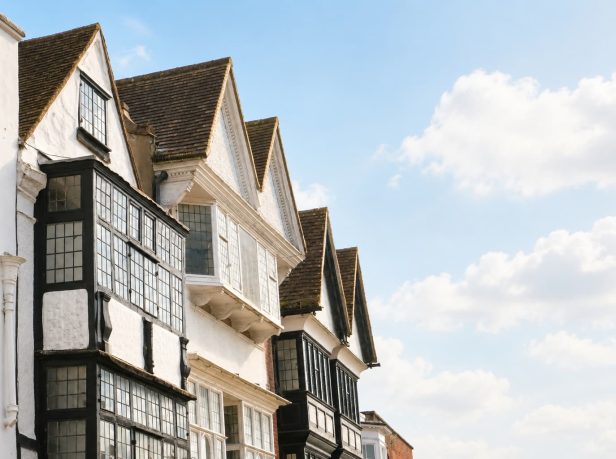
Heritage removals plan to satisfy both regimes from the start. Surveys map historic fabric and materials together. Methods protect joinery and finishes. Documentation satisfies both authorities.
Hand removal and localised enclosures always
Architects and conservation officers engaged
From dual-lens survey to documented handover, every step is planned to satisfy both the HSE and the conservation officer before a single fixing comes out.

An asbestos survey identifies and risk-scores materials with the historic fabric mapped alongside them. The removal plan begins with a clear picture of what must be protected, not only what must be removed.

Method statements set out the proposed protection, access arrangements and reinstatement approach in a format that supports a listed building consent application where one is needed.

Hand techniques, localised enclosures and layered protection regimes are used throughout. The condition of a Victorian cornice or an original plaster ceiling is treated with the same weight as the fibre count.

Clearance documentation, consignment notes and a photographic record of the protected fabric, the package your conservation officer, insurer and building trustees all need to see.
HSE compliance is never invoked as justification for causing heritage harm, and preservation concerns never become an argument for avoiding safe asbestos management.
Every operative on a heritage job is briefed on what must survive the work, not only on what must be removed from it.
Conservation officers, diocesan advisers and heritage architects are engaged in their own professional language, not managed around.
Where the safest answer for a listed building is managed retention rather than removal, that is the advice given in writing.
FAQS
Sometimes, and the answer depends on what is being removed and how. Taking out a freestanding cement tank is very different from stripping a coating that is bonded to original historic plaster. The test is whether the proposed works would affect the building’s special interest. We identify the question early and our method statement is written to support the consent application where one is required.
Yes. Where the material is in sound condition, not at risk of disturbance and where removal would cause disproportionate damage to significant fabric, asbestos encapsulation under a monitored management plan is often the right answer under both regulatory regimes. This is a legitimate and properly documented outcome, not an avoidance of the issue.
Through layered and reversible protection, localised enclosures rather than blanket plastic sheeting across fragile surfaces, hand methods in preference to mechanical ones, and reinstatement planned in detail before anything is opened up. It is slower and more deliberate than standard removal, and it is the only approach that is defensible in a consented heritage context.
With a survey and an early conversation that includes your architect. Vault and crypt lagging typically requires licensed asbestos removal and careful enclosure design that accounts for monuments, floor surfaces and historic fabric. It is entirely achievable, and it is best planned well before a programme deadline is pressing.
More care requires more time, so a premium applies and that is reasonable. It is fixed in writing like everything else. The genuinely expensive route is standard-method removal followed by conservation repairs, reinstatement costs and a difficult conversation with the local authority.
That is the preferred arrangement. When we engage early with the professional team, the method statement, the consent case and the programme are developed together in a single coordinated pass rather than in sequence. We work as part of the team, not around it.
The statutory consent position differs depending on designation, but our method does not change. Fabric-sensitive techniques and conservation-aware documentation apply wherever the character and significance of a building matter, regardless of whether it carries a statutory listing.
A method statement covering the proposed protection measures, access arrangements and reinstatement specification, together with photographic records of the fabric condition before and after works, and completion documentation confirming that what was done matched what was proposed. Written to strengthen the consent file, not merely to satisfy it.
We carry out asbestos removal across Kent, covering medieval churches and Tudor manor houses through to Victorian and Edwardian civic and ecclesiastical buildings across the county, and heritage properties on the county’s borders.
For enquiries related to our services, please reach out.
[email protected]
[email protected]
Speak to a surveyor, not a call handler.
Sales
07798 984290
Support / Enquiries
07468 437558
2 Park Rd
Guildford GU1 4PH
United Kingdom
CONTACT US
Send us your postcode and a description of the material you’ve found. A surveyor will be with you the same week, and your fixed written price follows within 48 hours.